As enterprises, smart campuses, commercial buildings, industrial parks, and residential communities continue to adopt digital management, traditional keys, access cards, and password-based entry systems are gradually being replaced by smarter identity authentication technologies. With contactless authentication, fast identity verification, and multiple authentication options, face recognition access control systems are becoming an important part of modern access control and security solutions.
What should you look for when choosing a face recognition access control terminal in 2026? And how can enterprises, schools, campuses, property managers, and system integrators select the right face recognition access control device for their projects?
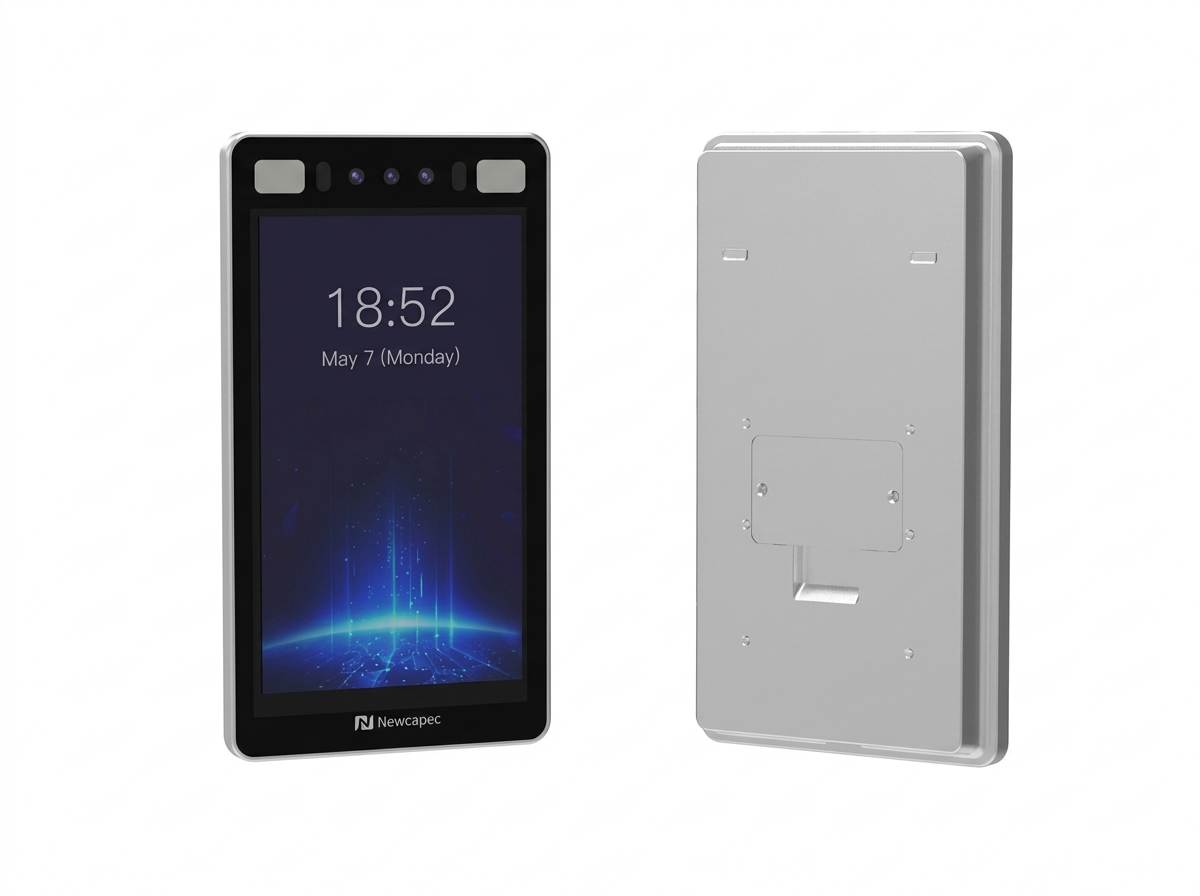
A face recognition access control system uses AI, facial recognition, and biometric authentication technologies to verify a person’s identity and determine whether they are authorized to enter a specific area. Unlike traditional card-based access control, users do not need to carry a physical access card. Instead, they simply stand in front of the terminal, where the camera captures their facial image. The system then extracts facial features, compares them with registered user data, and verifies whether the person has access permission.
Face recognition access control system consists of the following components:
Face Recognition Access Control Terminal: Captures facial images and performs identity authentication.
Access Controller: Receives authentication results and controls locks, gates, or other access devices.
Electronic Lock: Unlocks or remains locked based on the authorization result.
Door Sensor and Exit Button: Monitor door status and support controlled exit.
Management Platform: Provides centralized management of users, access permissions, devices and access records.
Network Communication System: Enables communication between terminals, controllers and management platforms.
When a person approaches the access control terminal, the camera captures their facial image and analyzes factors such as face position, viewing angle, and image quality.
The face recognition algorithm extracts distinctive facial features from the captured image and compares them with registered user information stored in the system.
Professional face recognition terminals may use dual-camera technology and liveness detection to help prevent unauthorized access attempts using photos, videos, or other presentation attacks.
After the person’s identity is verified, the system checks whether they have permission to access the specific door or area at that particular time.
If both identity verification and access authorization are successful, the system sends a control command to the electronic lock, turnstile, or other access device, allowing the person to enter.
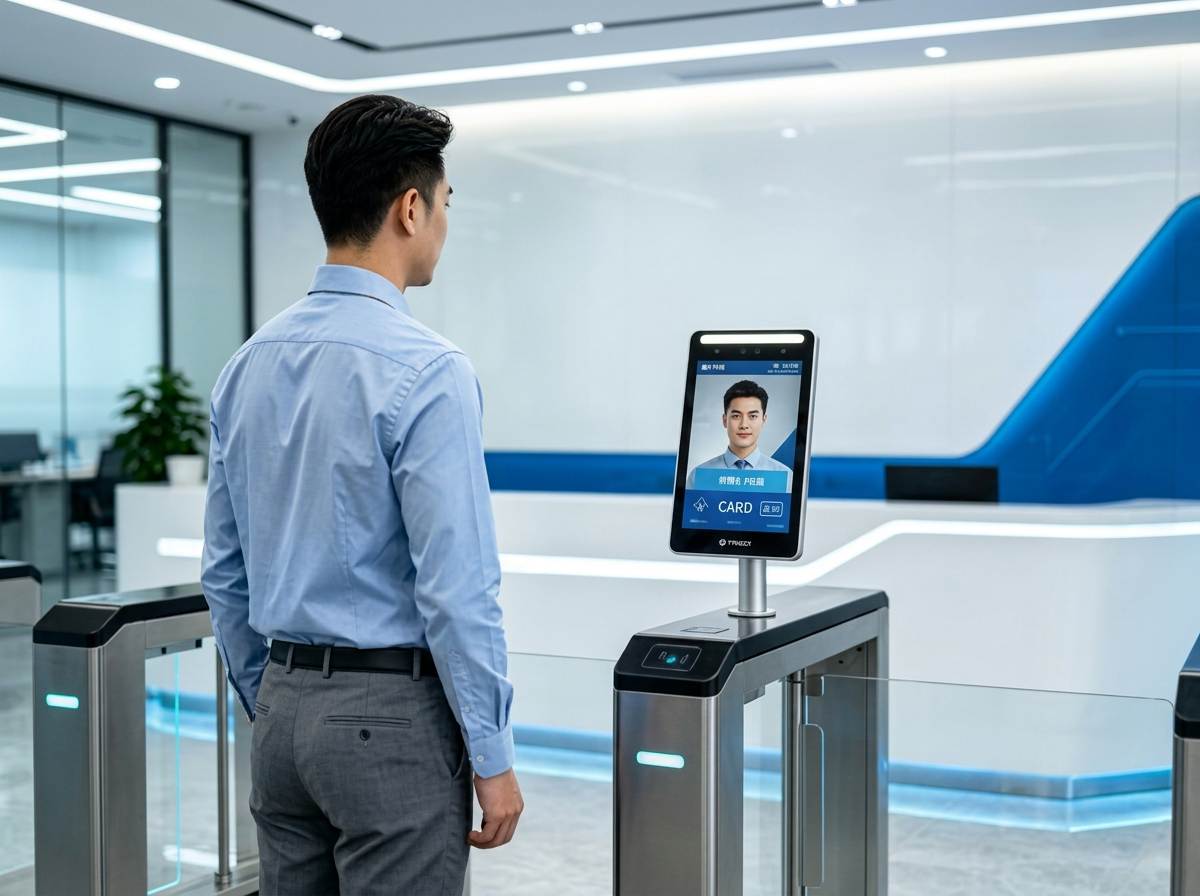
Traditional card-based access control requires users to carry an access card or other physical credential. Face recognition enables identity verification using biometric features, making it particularly suitable for environments where users need to enter and exit frequently, such as office buildings, campuses, industrial parks, and residential communities.
Professional access control terminals often support multiple authentication methods, including: Face recognition, IC cards, QR codes, Passwords, NFC. This allows organizations to configure different authentication methods according to user types and application scenarios.
In high-traffic environments such as universities, enterprise campuses, office buildings, and commercial properties, authentication speed can directly affect entry and exit efficiency. A fast face recognition terminal can help reduce queues and improve the overall user experience during peak hours.
With a centralized management platform, administrators can manage user information, configure access permissions, monitor devices, and review access records from a single system. This makes it easier to manage large numbers of users and access points across multiple buildings or locations.
Key factors to evaluate include:
Does the device use an AI-based face recognition algorithm?
Does it support dual-camera technology?
Does it support liveness detection?
Can it help prevent photo- or video-based spoofing attempts?
Can it recognize users under strong light, backlight, or low-light conditions?
The Newcapec F973 smart access control terminal uses dual-camera recognition technology combined with liveness detection and security-oriented design to enhance identity verification and data protection.
Enterprises might require facial recognition combined with card access, and campuses might need facial recognition paired with campus cards, whereas QR code authentication may be more suitable for visitor scenarios. It is recommended to select devices that support multimodal identity authentication.
A small office may only need to manage hundreds or several thousand users, while a large university, enterprise campus, or industrial park may need to support tens of thousands of users or more.
Newcapec face recognition access control terminals provide multiple communication and hardware interfaces and support SDK/API integration, allowing them to connect with existing access control, attendance, visitor management, and other business systems.
If the device features a local facial database and offline recognition capabilities, it can continue to perform identity authentication and access control even during temporary network outages.
How is facial data stored?
Is data encrypted during transmission?
Does the device use a security chip?
Does the system provide role-based access control?
Does it support on-premises deployment?
Are administrator operations logged?
Can data management policies be configured according to project requirements?
Organizations should also consider applicable data protection, privacy, and biometric data regulations in the country or region where the system will be deployed.
A capable supplier should ideally be able to support the complete project lifecycle: Product selection → Hardware deployment → Software development → System integration → Data integration → Mass deployment → Technical support
Check if the supplier provides: OEM/ODM services, SDK/API access, hardware customization, software feature customization, communication protocol adaptation, mass production, technical support, and project implementation support.
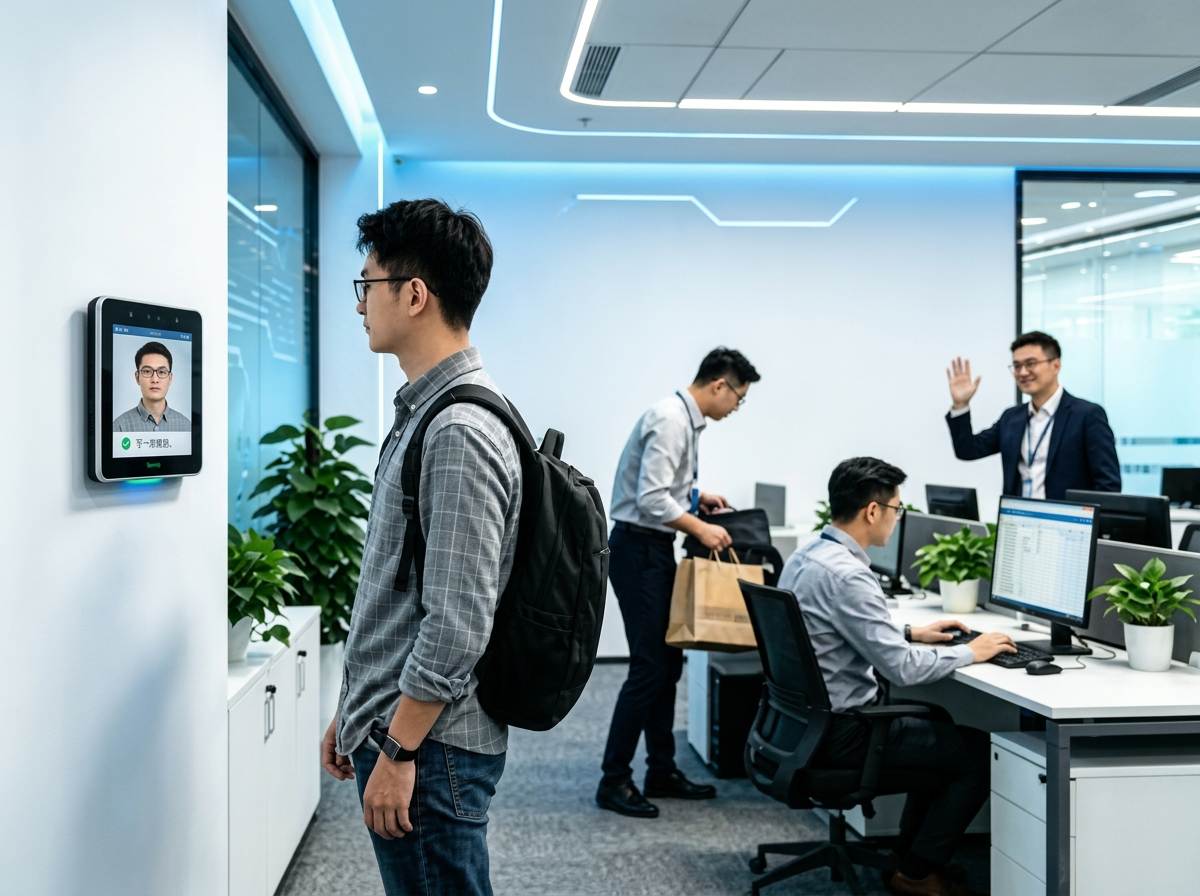
Enterprise Offices: Focus on Efficiency and Platform Integration
Smart Campuses: Focus on User Capacity and Multi-Scenario Integration
Industrial Parks and Commercial Buildings: Focus on Centralized Management
Residential Communities and Apartments: Focus on Convenience and Multiple Authentication Methods
Newcapec face recognition access control terminals use AI-based facial recognition technology and support dual-camera technology and liveness detection to help reduce security risks associated with photos, videos, and other non-live presentation attacks. The terminals can also support multiple authentication methods, including face recognition, IC cards, QR codes, and passwords, allowing authentication methods to be configured according to different project requirements.
Newcapec offers a wide range of facial recognition access control terminals tailored to varying workforce sizes, installation environments, and application requirements. With options spanning screen sizes, operating systems, facial capacity, communication interfaces, and authentication methods, we help customers select the ideal equipment for their specific projects.
Newcapec facial recognition terminals support diverse communication protocols and hardware interfaces. They offer SDK/API integration capabilities, enabling seamless connectivity with access control, time and attendance, visitor management, and other business platforms.
Newcapec possesses robust capabilities in product R&D, intelligent manufacturing, quality management, and mass delivery, while also supporting OEM/ODM partnerships. We provide product customization, system integration, and technical support tailored to the project needs of system integrators, software companies, solution providers, and equipment distributors.
Face recognition access control systems are evolving from standalone identity verification devices into comprehensive identity authentication solutions that integrate facial recognition, liveness detection, multimodal authentication, access control, and intelligent management. For enterprises, campuses, industrial parks, commercial buildings, and residential communities, choosing the right face recognition access control system requires more than simply considering recognition speed or face capacity. It is also important to evaluate authentication methods, environmental adaptability, data security, system compatibility, SDK/API integration capabilities, and long-term technical support.



