Choosing a smart lock for an apartment is about more than replacing traditional keys with digital access. The right smart lock should fit your door, provide reliable access control, meet residents’ everyday needs, and make property management easier when multiple units are involved.
For renters, installation requirements and landlord approval are often the first things to consider. For apartment owners, property managers, and real estate developers, the decision also involves tenant turnover, access permissions, system integration, and long-term operating costs.
So, how do you choose the right smart lock for an apartment? This guide covers six key features to compare, helping you evaluate different options and find a solution that fits your property’s needs.
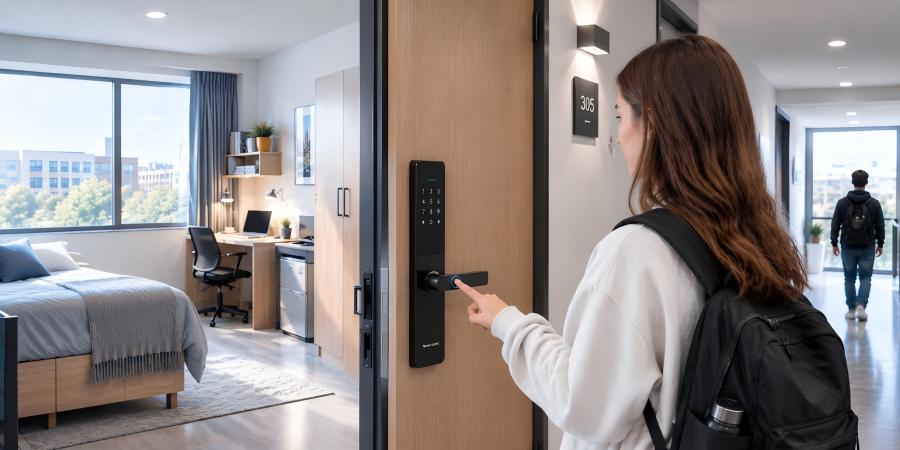
Before comparing smart lock features, make sure the lock is compatible with your apartment door. Even a feature-rich smart lock is not the right choice if it cannot be installed properly or work reliably with the existing door hardware.
Consider the following factors before making a purchase:
Apartment doors come with different lock configurations. For example, a smart lock designed for a standard North American deadbolt may not fit a door with a mortise lock or a different regional lock mechanism.
If you’re renting, check your lease and get your landlord’s approval before replacing the lock. For managed apartment buildings, make sure the selected hardware meets the property’s installation requirements and applicable building and fire safety codes.
For individual users, checking compatibility helps avoid unnecessary installation costs and product returns. For property developers and operators, it can determine how smoothly hundreds or even thousands of locks can be installed.
Practical tip: Before requesting a quote, prepare your door dimensions, existing lock specifications, installation photos, and project requirements. For large-scale projects, ask the supplier to confirm compatibility and test a sample installation before placing a bulk order.
The second feature to compare is how residents, staff, and authorized visitors can unlock the door.
Different access methods suit different users and properties. Smartphone access may be convenient for some residents, while NFC card access can be more practical for student housing, serviced apartments, and properties that already use access cards.
| Access method | Key benefits | What to consider |
|---|---|---|
| NFC/RFID card | Convenient for everyday access and familiar in many managed properties | Card technology, credential security, reader compatibility, and card management |
| Smartphone or mobile credential | Reduces reliance on physical keys and may support remote access features | Phone compatibility, connectivity, app requirements, and system integration |
| PIN code | Allows access without carrying a key or card | Code management, unauthorized sharing, and available security controls |
| Mechanical key | Provides a physical backup where supported | Key control, emergency procedures, and lock configuration |
| Fingerprint | Offers convenient biometric authentication | Sensor performance, enrollment management, privacy, and environmental conditions |
The available access methods vary by product. Don’t assume that every smart lock supports all five options.
For example, Newcapec’s I3-C18 apartment smart lock supports NFC card access and a mechanical key. The I3-C06 also supports card access and a mechanical key. Both are worth considering for properties that prefer card-based entry with a physical backup option.
The best access method depends on how residents use the property. Student housing may benefit from integration with an existing campus card system, while serviced apartments may have different requirements for guest access and reservation-related workflows.
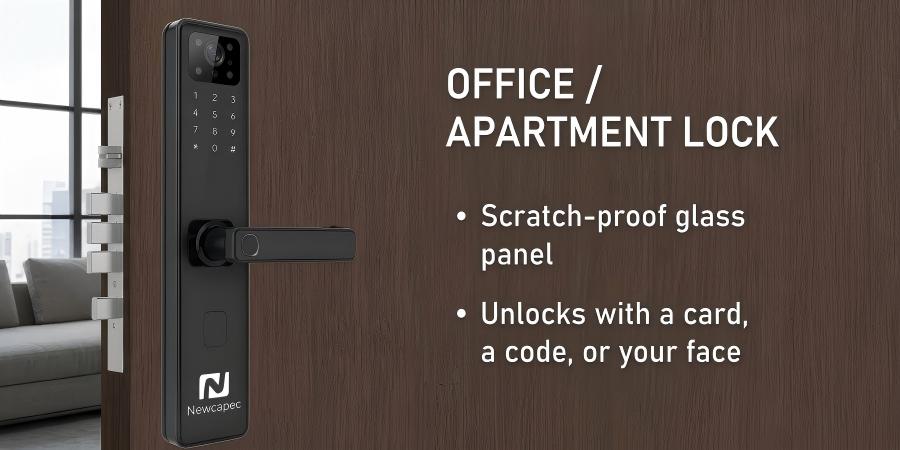
A smart lock should make access easier to manage without introducing unnecessary security risks. Digital convenience alone does not guarantee better physical security.
When comparing apartment smart locks, look at the complete locking system, including its mechanical construction, electronic authentication, credential management, and emergency procedures.
Ask how the lock verifies cards, mobile credentials, PIN codes, or other supported access methods. For card-based systems, confirm the supported card technology and what credential protection measures are available.
For managed properties, administrators should be able to assign and update access permissions according to the system’s capabilities. Find out how lost cards, former residents’ credentials, and staff permissions are handled.
Confirm the process for revoking or replacing a credential. If permissions are managed centrally, ask how updates are sent to the lock and whether any additional action is required at the door.
Find out whether the lock can authenticate supported credentials locally, how it behaves when the network is unavailable, and how access permissions are synchronized when connectivity returns.
Check whether the lock supports a mechanical key, an emergency power procedure, or another manufacturer-approved recovery method. The emergency procedure must match the lock’s actual design.
Request product specifications, relevant test reports, certifications, and information about credential protection. Verify the issuing organization, product model, and scope of each certification rather than relying on general marketing claims.
For apartment buildings, also consider how the smart lock works with the door’s mechanical security and the property’s wider access control arrangements. A smart lock does not replace properly installed door hardware or sound building security procedures.
Managing access for a single apartment is relatively straightforward. For properties with dozens or hundreds of units, however, handling keys and access permissions can become an ongoing operational challenge.
This is where smart locks designed for managed residential properties can offer additional value.
These capabilities depend on the lock, management software, network architecture, and overall system configuration. A standalone smart lock may not support centralized management without additional hardware or software.
Consider an apartment property where residents move in and out every month. With a traditional key-based system, staff may need to collect keys, issue replacements, or arrange lock changes when necessary.
A properly configured electronic access system may simplify the process by allowing administrators to update or revoke credentials instead of physically replacing keys or cylinders for every routine tenant change. The exact workflow depends on the credential type, lock configuration, and management platform.
This can be particularly useful in student housing and long-term rental properties, where room changes, expired leases, and staff turnover often require access permissions to be updated.
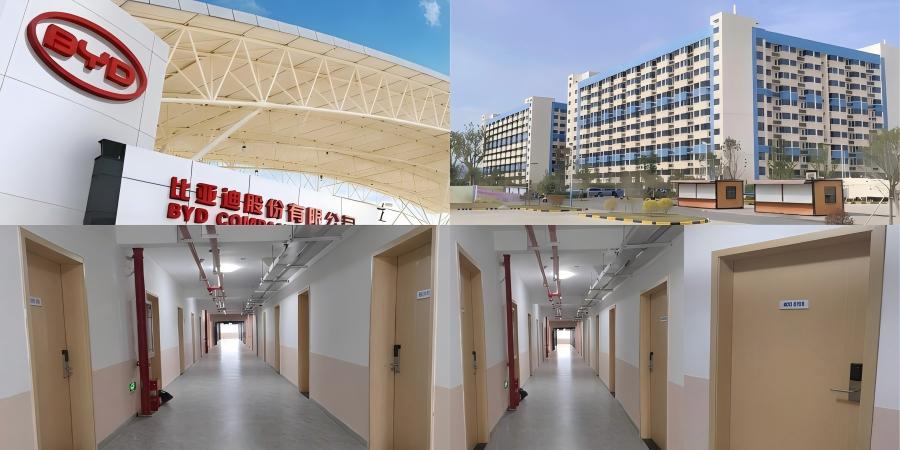
A smart door lock can work independently, but it may become more valuable when integrated with a wider property management or access control system.
For apartment developers, student housing operators, hospitality groups, and system integrators, compatibility with existing infrastructure can be just as important as the lock’s individual features.
Depending on your project, relevant systems may include:
Before purchasing, ask the supplier to explain the integration architecture. Does the lock connect directly to the management platform, or does it require a controller, gateway, server, or middleware? Which functions are available through the API? Are there additional licensing, development, or maintenance costs?
You should also confirm supported communication protocols, system requirements, integration responsibilities, and ongoing technical support arrangements.
A solution that works for one building may not be suitable for a growing portfolio. If you expect to add more units or buildings, evaluate device capacity, user management, permission structures, software updates, and the process for bringing new equipment online.
Newcapec provides smart terminal and IoT solution capabilities, including apartment smart lock options and software integration possibilities. If your project requires PMS or third-party system integration, confirm the specific lock model, interfaces, and supported functions with the technical team before finalizing your solution.
The purchase price is only one part of the cost of an apartment smart lock. Installation, power management, software, maintenance, replacement parts, and technical support can all affect your long-term budget.
For a single apartment, these costs may be relatively small. Across a large residential portfolio, even minor recurring expenses can add up.
Don’t rely on advertised battery life alone. Actual battery performance can vary with usage frequency, communication settings, temperature, battery type, and other operating conditions. Ask the manufacturer for the test conditions behind its battery-life claims and the recommended maintenance schedule.
For centrally managed properties, also consider how maintenance teams can identify locks that need attention and whether the system supports low-battery or connectivity alerts.
To compare shortlisted options, estimate the total cost of ownership over the same period.
Estimated total cost of ownership = Hardware + installation + connectivity and software + maintenance and replacements + other recurring costs.
Use the same time frame, number of doors, and cost assumptions for each option. If one lock requires an additional controller or paid software service, include those costs rather than comparing hardware prices alone.
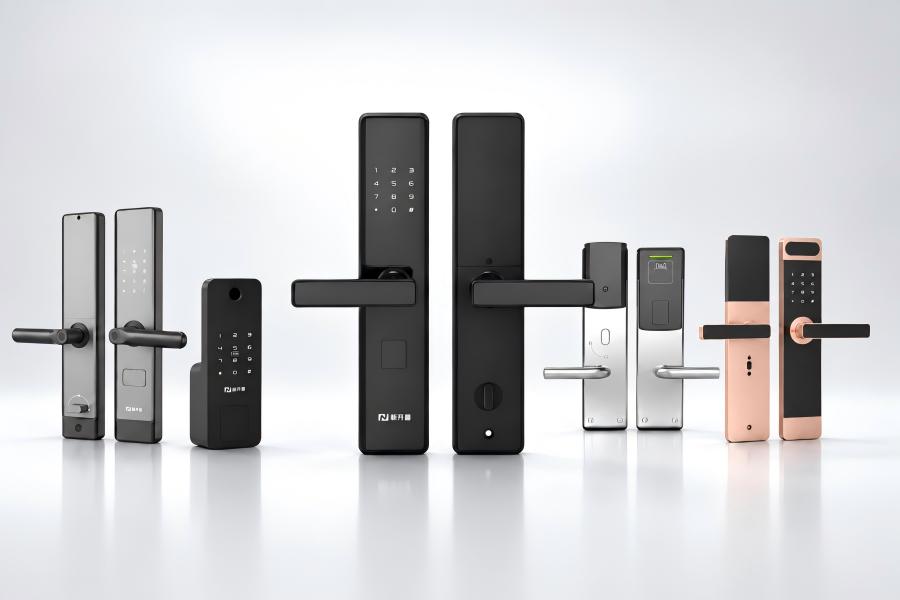
There is no single smart lock that works best for every apartment. The right choice depends on whether you’re securing an individual rental unit, outfitting an entire residential building, managing student housing, or integrating locks into an existing property platform.
Use the following comparison to narrow down your options.
| Application | Features to prioritize |
|---|---|
| Individual apartment | Door compatibility, convenient access, security, and backup entry |
| Rental apartment | Installation permissions, easy credential updates, and a smooth move-in process |
| Student housing | Card-based access, bulk administration, and campus system integration |
| Multi-unit residential building | Centralized management, scalable deployment, maintenance, and access logs |
| Serviced apartments | Guest access workflows, credential validity periods, and potential PMS integration |
| Multi-property portfolio | Multi-building management, integration flexibility, lifecycle costs, and technical support |
Newcapec offers apartment smart lock options that can be evaluated according to door requirements, access methods, and property management needs.
These models provide starting points for projects that require card-based apartment access. Before selecting a model, confirm its dimensions, lock body compatibility, supported card specifications, installation requirements, and any project-specific needs.
If your project requires centralized management or third-party software integration, confirm which functions are supported by the selected lock, any associated controllers, and the management platform. Don’t assume that every model supports every feature.
For system integrators, distributors, property developers, and apartment operators, Newcapec can be considered as a potential smart lock and smart terminal solution provider. A technical review and sample evaluation can help determine whether a particular configuration meets your project requirements.
Choosing the right smart door lock for an apartment means balancing security, convenience, installation requirements, management efficiency, system integration, and long-term costs.
By comparing these six features against your actual requirements, you can make a more informed decision and avoid paying for features your property doesn’t need. Explore Newcapec’s apartment smart lock solution and consult the technical team to confirm product specifications and integration requirements before making your final selection.



